
Everyone experiences trauma differently. Different experiences, different reactions, different ways of processing emotions and beliefs. Different ways of surviving.
Recently, “17 Symptoms of Complex PTSD” has been a trending search. Research and diagnostic information do not include an evidence based list that includes 17 symptoms.
📈 What The Research Shows
The World Health Organization provides 3 core symptom clusters for Post-traumatic Stress Disorder (PTSD).
1. Re-experiencing the Trauma
This goes beyond just “remembering.” It can feel like the trauma is happening again in the present moment.
Common experiences include:
- flashbacks
- nightmares
- intrusive memories
- emotional reliving
- body-based reactions (panic, freezing, shutdown)
2. Avoidance
Avoidance isn’t just external, it’s often internal. People may avoid anything that brings up distressing thoughts or emotions.
This can look like:
- avoiding people, places, or situations
- suppressing thoughts or feelings
- emotional numbing
- using distraction or overworking to cope
3. Sense of Current Threat
This reflects a nervous system that feels like danger is still present. Even when things are objectively safe, the body may not register it that way.
Common patterns:
- hypervigilance
- feeling constantly “on edge”
- exaggerated startle response
- difficulty relaxing
- scanning the environment for danger
Complex PTSD (C-PTSD) is associated with more severe symptomatology and results from prolonged exposure to a series of traumatic events starting in childhood. C-PTSD differs from PTSD in that the distress is coming from several channels: physical, sexual, emotional, or cognitive.
“In complex PTSD, the traumatic stressor is highly multilayered; it is very interactive in the sense that one aspect of the traumatic stress interacts with or augments another.”
Golan Shahar, PhD., as cited in Fairbanks, 2025.
🧠 What Makes It “Complex”: Disturbances in Self-Organization
C-PTSD symptoms include the 3 core clusters of PTSD (as listed above) PLUS an additional 3 clusters.
- Emotional regulation difficulties
- Negative self-concept
- Relational difficulties
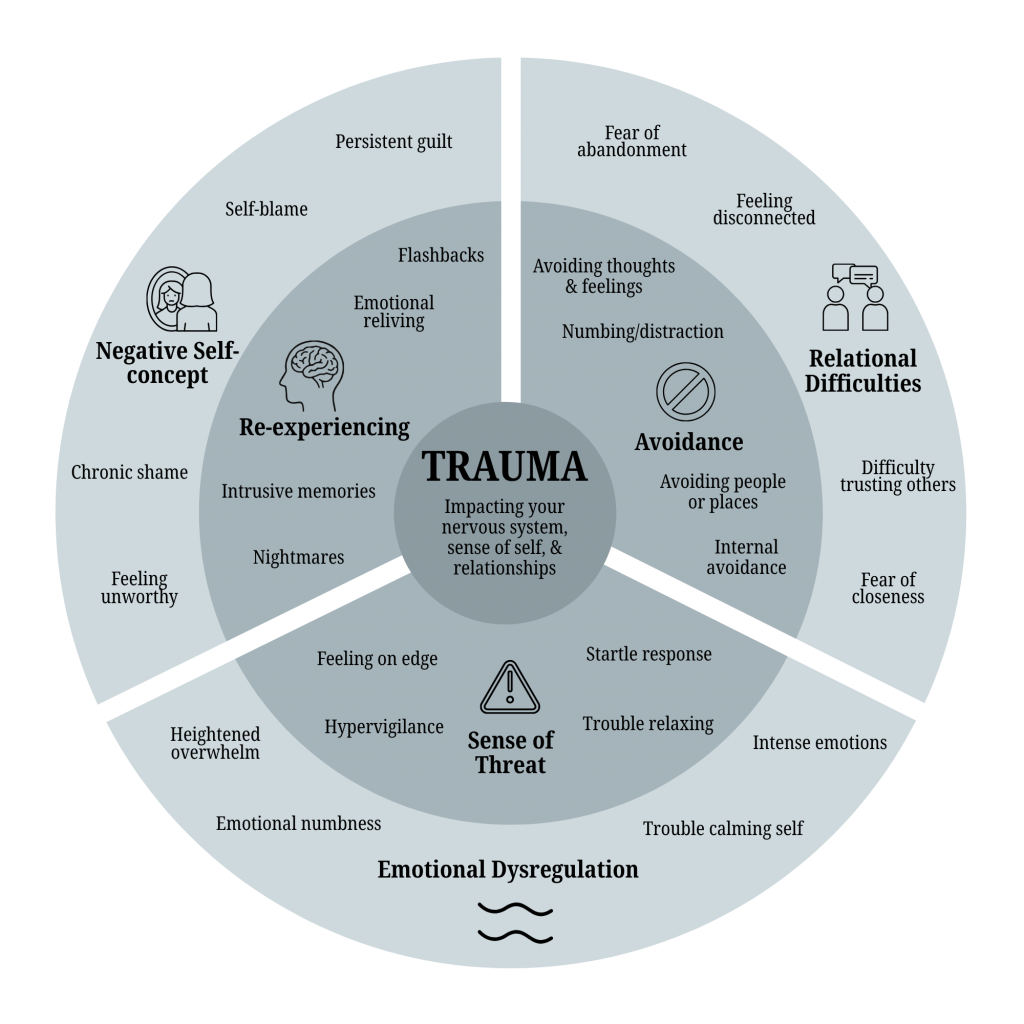
4. Emotional Regulation Difficulties
This isn’t just “strong emotions”, it’s difficulty managing them.
This may include:
- intense emotional reactions
- rapid mood shifts
- feeling overwhelmed easily
- difficulty calming down
- emotional numbness or shutdown
- difficulty identifying or naming emotions
5. Negative Self-Concept
Trauma can deeply shape how someone sees themselves. This often goes beyond low self-esteem into a more global sense of self.
Common experiences:
- chronic shame
- feeling “broken,” defective, or unworthy
- persistent guilt
- self-blame
- harsh inner critic
6. Relational Difficulties
When trauma occurs in relationships, it often impacts future relationships. This can create both longing for connection and fear of it.
This may look like:
- difficulty trusting others
- fear of closeness or vulnerability
- feeling disconnected or isolated
- people-pleasing or over-accommodating
- fear of abandonment
❓Where Did the “17 Symptoms” Come From?
So if the research defines 6 clusters… where did 17 come from?
Most viral lists are created by:
- breaking broader categories into smaller bullet points
- combining overlapping trauma responses
- adding commonly related patterns (like dissociation or people-pleasing)
- simplifying complex clinical frameworks for social media
So while the individual experiences may be valid, the number itself is:
- not standardized
- not diagnostic
- not based on a single evidence-based source
💡Why This Distinction Matters
You might be thinking:
“If the experiences are real, does the number really matter?”
And the answer is: it does, because framing shapes understanding.
When CPTSD is reduced to a checklist:
- people may self-diagnose based on partial overlap
- nuance gets lost
- trauma responses get oversimplified
- people may feel confused when they don’t “fit the list”
A cluster-based model, on the other hand:
- reflects patterns rather than isolated symptoms
- allows for individual variation
- aligns with how trauma actually impacts the nervous system
A More Helpful Way to Understand CPTSD
Instead of reflecting on whether or not you experience these symptoms, it can be more helpful to explore what your individual experience has been.
Questions to ask yourself:
- How does my nervous system respond to stress or perceived threat?
- How has my sense of self been shaped by past experiences?
- How do my relationships feel: safe, overwhelming, distant?
This shifts the focus from checking boxes → understanding patterns.
If you’ve been relating to the “17 symptoms of complex PTSD” posts, that doesn’t mean you’re wrong. It means you’re recognizing real experiences. Learning what your experience means, feeling validated, and feeling understood fosters an environment you can actually heal in.
Because trauma isn’t a viral checklist.
It’s a lived experience that impacts:
- your body
- your identity
- and your relationships
When you begin your healing journey it can be overwhelming and exhausting. Check out these resources to support your healing ♥
Want the bigger picture? Explore all guides ➜
Sources
Fairbank, R. (2025, March 1). When trauma becomes complex. Monitor on Psychology, 56(2). https://www.apa.org/monitor/2025/03/ce-complex-ptsd