
Rejection. It’s not something anyone enjoys feeling. However, some people experience intense emotional pain when rejection, criticism, or disapproval is experienced. Rejection Sensitive Dysphoria (RSD), commonly connected with heightened emotional sensitivity in neurodivergent individuals, is exhausting and overwhelming. It doesn’t feel like something that can just be “brushed off”. It feels urgent and severe.
What Does Rejection Sensitive Dysphoria Feel Like?
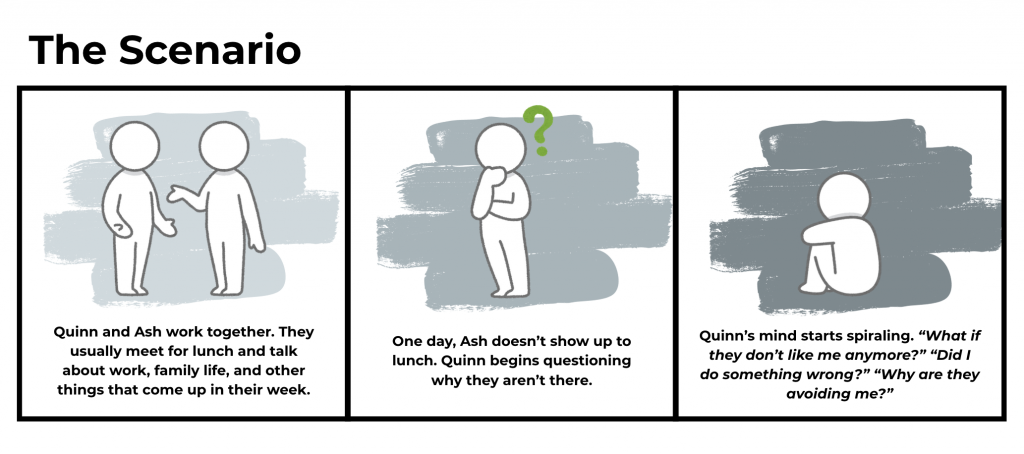
In the above scenario, someone who doesn’t struggle with RSD may have wondered why Ash wasn’t at lunch. However, they may have then started thinking that Ash was busy with work and couldn’t take a break that day, or that Ash wasn’t feeling well, or even maybe that Ash wasn’t at the office that day. For Quinn, the perception of Ash not being there caused immediate feelings of rejection and hurt. Quinn wasn’t able to see the other possible alternatives because the emotions were so intense.
How RSD Shows Up in Daily Life
1. Subtle Shifts
It may be a difference in someone’s tone, body language, or communication style. RSD automatically goes into analysis mode. Questions of “What did I do?”, or “Are they mad at me?” are racing through the mind. You may begin to reread messages analyzing every word and punctuation mark. You start to mentally scan what you possibly could have done wrong. Neurodivergent individuals are already observant of social cues causing overactive awareness of even the slightest most subtle shift.
2. Emotional Reactions That Feel Bigger Than Expected
You may logically know, “This probably isn’t that big of a deal.” You may still start to feel sick to your stomach, chest pain, or a rush of shame or anxiety. Your brain may be trying to find the logical solution, but RSD isn’t just cognitive. Your nervous system is reacting too.
3. Over-Explaining, Apologizing, or Trying to Fix It
As soon as you notice the change you may start to over-explain yourself trying to clarify your intent. You may apologize quickly, or react impulsively sending multiple follow-up messages or calls. You also may try to fix it and “smooth things over”. This isn’t attention-seeking behavior. Your nervous system is looking for the fastest way to feel safe and restore connection.
4. Avoidance of Social Risk
You may begin to avoid certain social interactions. You may not speak up as often, or initiate conversations. You may avoid conflict at all costs, or hesitate to share your thoughts and ideas. Why? There is an intense fear: “I don’t want to feel like that again.”.
5. The Internal Spiral Afterward
After an interaction occurs, you may find yourself replaying the conversation over and over trying to remember what their body language was or what specifically was said. You may be trying to decode what actually happened to “make it make sense”. You may also ruminate over it, unable to think about or do anything else. It can be exhausting and frustrating.
Why Late Diagnosed Autistic & ADHD Adults Experience This So Intensely
Growing up you may have been told things like:
- “You’re too much”
- “You’re not trying hard enough”
- “Why can’t you just…”
- “You’re overreacting”
This can cause feelings of being misunderstood, being different, not being able to do things right, or not being good enough. Even if those things weren’t said directly, the emotional reaction and internalized beliefs were still there. The brain learns to adapt to these messages to try and protect yourself by being hyper-aware of how others respond to you.
Your nervous system doesn’t forget those experiences. Instead it uses them as information to keep you safe. So, even when something that is not an actual threat happens, your nervous system activates and tells your brain that “we need to protect ourself” When this happens, the brain prioritizes it’s resources into protection causing the logical part of your brain to shut down. That’s why it feels impossible to recognize in the moment that other alternatives may be present.
You Aren’t “Too Much”
RSD is a nervous system response.
You are NOT “too sensitive”.
You are NOT “making too big of a deal”.
You are NOT “too much”.
Learning more about how your nervous system reacts in these situations can empower you to feel more in control of your emotions. Understanding and recognizing the way your body feels or the interpretations that are present allow you to notice your patterns and reactions. It’s not easy, but the more information you have about your experiences, the more your body and brain is able to “sort things out” and reduce the emotional dysregulation.
Want the bigger picture? Explore all guides ➜
Do you struggle with RSD? If you resonated with the experiences discussed in this post, or you’re not quite sure, take the RSD Test below to check in with yourself about your experiences.